English Novel
-
 Visit product page →
By the International Booker Prize Shortlisted Author of On Earth As It Is Beneath
Animals go mad and men die (accidentally and not) at a slaughterhouse in an impoverished, isolated corner of Brazil.In a landscape worthy of Cormac McCarthy, the river runs septic with blood. Edgar Wilson makes the sign of the cross on the forehead of a cow, then stuns it with a mallet. He does this over and over again, as the stun operator at Senhor Milo’s slaughterhouse: reliable, responsible, quietly dispatching cows and following orders, wherever that may take him. It’s important to calm the cows, especially now that they seem so unsettled: they have begun to run in panic into walls and over cliffs. Bronco Gil, the foreman, thinks it’s a jaguar or a wild boar. Edgar Wilson has other suspicions. But what is certain is that there is something in this desolate corner of Brazil driving men, and animals, to murder and madness.
About the Author
-
 Visit product page →
A revelatory new translation of the playful, incomparable masterpiece of one of the greatest Black authors in the Americas
The mixed-race grandson of ex-slaves, Machado de Assis is not only Brazil's most celebrated writer but also a writer of world stature, who has been championed by the likes of Philip Roth, Susan Sontag, Allen Ginsberg, John Updike, and Salman Rushdie. In his masterpiece, the 1881 novel The Posthumous Memoirs of Brás Cubas (translated also as Epitaph of a Small Winner), the ghost of a decadent and disagreeable aristocrat decides to write his memoir. He dedicates it to the worms gnawing at his corpse and tells of his failed romances and halfhearted political ambitions, serves up harebrained philosophies, and complains with gusto from the depths of his grave. Wildly imaginative, wickedly witty, and ahead of its time, the novel has been compared to the work of everyone from Cervantes to Sterne to Joyce to Nabokov to Borges to Calvino, and has influenced generations of writers around the world.
This new English translation is the first to include extensive notes providing crucial historical and cultural context. Unlike other editions, it also preserves Machado's original chapter breaks--each of the novel's 160 short chapters begins on a new page--and includes excerpts from previous versions of the novel never before published in English.
DETAILS • Author: Machado De Assis • Publisher: Penguin • Format: Paperback
-
 Visit product page →
An exemplary compendium of brief glimpses into the quotidian concerns of everyday South Americans . . . [that] exudes the author’s characteristically bright insight and sense of attentive amusement." – Kirkus Reviews, starred review
25 Crónicas – uniquely Latin American short stories – from a master of the form, a star heralded alongside Samanta Schweblin and Mariana Enríquez for blending insight, honesty, and humor
Uhart reinvigorates our desire to connect with other people, to love the world, to laugh in the face of bad intentions, and to look again, more closely: from lapwings, road-side pedicures, and the overheard conversations of nurses and their patients, to Goethe and the work of the Bolivian director Jorge Sanjinés.
“It was a year of great discovery for me, learning about these people and their homes,” Hebe Uhart writes in the opening story of A Question of Belonging, a collection of texts that traverse Argentina, Paraguay, Brazil, Spain, and beyond. Discoveries sprout and flower throughout Uhart’s oeuvre, but nowhere more so than in her crónicas, Uhart’s preferred method of storytelling by the end of her life. For Uhart, the crónica meant going outside, meeting others. It also allowed the mingling of precise, factual reportage and the slanted, symbolic narrative power of literature.
Here, Uhart opens the door on all kinds of people. We meet an eccentric priest who conducts experiments down by the riverside hoping to land on a cure for cancer; a queenly (read: beautiful and relentlessly indolent) teenage girl; a cacique of the Pueblo Nación Charrúa clan, who tells her of indigenous customs and histories.
She writes with characteristic slyness. In the last lines of the title story, Uhart writes, “And I left, whistling softly.” Wherever she may have gone, we are left with the wish we could follow alongside. -
 Visit product page →
Life under Brazil’s brutal “cordial racism” comes painfully alive in this novel of fathers and sons.
How do you become the protagonist of your own life? For Pedro, it means searching for himself in the objects his father left behind: the layers that make up his life, and that of his parents, and the circumstances, geographies, and wounds that shaped them all. It’s an archaeology of affections, but also of life in southern Brazil, where being black on the streets of Porto Alegre manifests violences large and small. Where being a young woman, raised by a single mother, may find you seeking security in the untrustworthy arms of men.
In Dark Side of Skin , Jeferson Tenório takes on fathers and sons, Shakespeare and Cervantes, and the inescapable bonds and burdens of family and history in one delicately rendered, painfully precise account of loved ones lost and found.
About the Author
-
 Visit product page →
the social and political milieu of nineteenth-century Brazil. These signature traits are on full display in Quincas Borba, a novel that sees Machado satirize a rapidly changing Rio de Janeiro.
Originally published in 1891, the story begins with the death of its titular character, a mad philosopher infamous for spouting pessimistic theories of “Humanitism.” Borba leaves his fortune—including his dog, also named Quincas Borba—to Rubião, his loyal caretaker and a schoolteacher by trade. Bestowed with opulence beyond his wildest dreams, Rubião is quickly coaxed into the comforts of a rich man’s life—the only stipulation being that he continues to care for the canine Quincas Borba with the same dedication he once did the human. Adrift in the big, bad, bustling world of late-1860s Rio de Janeiro, it isn’t long before Rubião is targeted by the city’s sycophants, who can smell his naïveté from a mile away.
Playfully told by an omniscient and possibly unreliable narrator, the novel is at once irreverent and ambitious, brimming with barbed wit and keen philosophical inquiry. Brilliantly translated by Margaret Jull Costa and Robin Patterson—the duo credited with introducing a new generation of readers to Machado through their translations of Dom Casmurro, The Collected Stories, and Posthumous Memoirs of Bras Cubas—Quincas Borba is another strikingly modern tale from a blazing progenitor of twentieth-century fiction.Language English Print length 352 pages ISBN-10 1324096705 ISBN-13 978-1324096702 -
 Visit product page →
The Complete Stories
Fiction by Clarice Lispector
Translated from Portuguese by Katrina Dodson
With a contribution by Benjamin Moser
Here, gathered in one volume, are the stories that made Clarice a Brazilian legend. Originally a cloth edition of eighty-six stories, now we have eighty-nine in all, covering her whole amazing career, from her teenage years to her deathbed. In these pages, we meet teenagers becoming aware of their sexual and artistic powers, humdrum housewives whose lives are shattered by unexpected epiphanies, old people who don’t know what to do with themselves— and in their stories, Clarice takes us through their lives—and hers—and ours.
-
 Visit product page →
Stormy Isles, originally published in Portuguese in 1944 and set in the Azores between 1917 and 1919, focuses on the vivacious and sharp Margarida, who, at twenty years of age, is a model of feminist aspirations and the paragon of her generation. A member of the elite, she foregoes some of the entitlements of her class and struggles with the morals of the bourgeois society in which her life unfolds. Narrated in realist and poetic language as a series of interconnected tales within a larger story, this completely revised translation of Stormy Isles provides a rich, vivid portrait of the Azores in the early twentieth century.
-
 Visit product page →
The Turner of Silences written by Mia Couto translated by David Brookshaw.
Mwanito Vitalcio was eleven when he saw a woman for the first time, and the sight so surprised him he burst into tears. Mwanito's been living in a big-game park for eight years. The only people he knows are his father, his brother, an uncle, and a servant. He's been told that rest of the world is dead, that all roads are sad, that they wait for an apology from God. In the place his father calls Jezoosalem, Mwanito has been told that crying and praying are the same thing. Both, it seems, are forbidden.
The 8th novel by NY Times-acclaimed Mia Couto, The Tuner of Silences is the story of Mwanito's struggle to reconstruct a family history that his father is unable to discuss. With the young woman's arrival in Jezoosalem, however, the silence of the past quickly breaks down, and both his father's story and the world are heard once more. The Tuner of Silences was heralded as one of the most important books to be published in France in 2011, and remains a shocking portrait of the intergenerational legacies of war. Available for the first time in English.
Author
Mia Couto was born in 1955 in Mozambique and is the most prominent writer in Portuguese-speaking Africa. He has been active as a journalist and during the revolutionary struggle headed the AIM news agency. He now lives in Maputo where he works as an environmental biologist and runs the Mozambique part of the Kruger National Park.
Translator
David Brookshaw is a professor of Hispanic, Portuguese, and Latin American Studies at the University of Bristol (London), and the General Editor of the HiPLA Monograph Series. He is the translator of six books by Couto, including Sleepwalking Land and The Last Flight of the Flamingo.
Language English
length 224 pages
ISBN: 9781926845951
-
 Visit product page →
Written by Paulo Coelho, Translated by Margaret Jull Costa.
“One of Coelho’s strongest.”—Kirkus Reviews
“The book casts a curiously sweet spell.”—Entertainment Weekly
From the author of beloved international bestseller The Alchemist, a daring novel that explores the sacred nature of sex and love and invites us to confront our own prejudices and demons.
Eleven Minutes tells the story of Maria, a young girl from a Brazilian village whose first innocent brushes with love leave her heartbroken. At a tender age, she becomes convinced that she will never find true love, instead believing that “love is a terrible thing that will make you suffer.” A chance meeting in Rio takes her to Geneva, where she dreams of finding fame and fortune, yet ends up working as a prostitute.
In Geneva, Maria’s despairing view of love is put to the test when she meets a handsome young painter. In this odyssey of self-discovery, Maria must choose between pursuing a path of darkness—sexual pleasure for its own sake—or risking everything to find her own inner light and the possibility of true love.
“Sensual . . . [An] adults-only fairly tale.”—Washington Post
“[This] Brazilian wizard makes books disappear from stores.”—The New York Times
About Author
Paulo Coelho is the author of "The Alchemist", he was born in 1947 in the city of Rio de Janeiro, Brazil. Being the author of 30 books that have sold over 320 million copies in 170 countries, he has become one of the most widely read authors in the world today. Paulo Coelho has been a United Nations Messenger of Peace since 2007 and this has allowed him to continue to promote intercultural dialogue and to focus on the needs of children. He is a member of the Brazilian Academy of Letters and the recipient of over 115 awards and honours, including the Hans Christian Andersen Award, the Grinzane Cavour Book Award and the Chevalier de l’Ordre National de la Légion d’Honneur, to name a few.
Publisher: HarperCollinsShipping dimensions: 8" H x 5" W x 1" LISBN: 9780060589288Length: 320Language:English -
 Visit product page →
Set in Lisbon at the close of the nineteenth century, ‘The Maias’ is both a coming-of-age novel and a passionate romance. Our hero Carlos Maia, heir to one of the greatest fortunes in Portugal, is rich, handsome, generous and intelligent: he means to do something for his country, something useful, something that will make his beloved grandfather proud. However, Carlos is also a bit of a dilettante. He drifts along, becoming a doctor and pottering about in his laboratory, but spends more and more time riding his splendid horses or visiting the theater, having affairs or reading novels. His best friend and chief partner in crime, Ega, is likewise engaged in a long summertime of witticisms and pleasure. Carlos however is set on a dead reckoning course with fate?with the love of his life and with a terrible, terrible secret...Newly translated by the acclaimed translator Margaret Jull Costa (translator of José Saramago's ‘Blindness’), New Directions is proud to bring Eça de Queirós' brilliant prose to life for American readers for the first time.
About the Author
Eça de Queiroz was born on November 25, 1845, in Póvoa de Varzim and is considered one of the greatest novelists in all of Portuguese literature, the first and main Portuguese realist writer, a profound and insightful author of literary prose.
He entered the Law Course in 1861, in Coimbra, where he associated with many of the future representatives of the Generation of 70. After finishing his studies, he founded the newspaper , in 1866, an organ in which he began his journalistic experience. In 1871, he gave the lecture "Realism as a new expression of Art", integrated into the Lisbon Casino Conferences and a product of the aesthetic evolution that led him towards the Realism-Naturalism of Flaubert and Zola. In the same year, he began, with Ramalho Ortigão, the publication of As Farpas, satirical chronicles of inquiry into Portuguese life.In 1872 he began his diplomatic career, during which he held the position of consul in Havana, Newcastle, Bristol, and Paris. It was, therefore, with the critical distance afforded by his experience living abroad that he conceived most of his novels, dedicated to the critique of Portuguese social life, among which stand out *O Primo Bazilio*, *O Crime do Padre Amaro*, *A Relíquia*, and *Os Maias*, the latter considered his masterpiece. He died on August 16, 1900, in Paris.
- ISBN
-
9780811216494
- Dimensões
-
15,5 x 22,9 x 3,8 cm
- Nº Páginas
-
596
-
 Visit product page →
This collection of twenty-six stories is “a fine introduction to Latin American literature” ( The Washington Post Book World ).
This splendid collection of stories by twenty-six Latin American authors features the new voices and celebrated masters of one of the world's foremost literatures. Explore the gothic sexual ambiguities of Carlos Fuentes’ “The Doll Queen,” the psychological compression of Clarice Lispector’s “Love,” or the baroque pyrotechnics of Machado de Assis and Adolfo Bioy Casares. Discover the parodically hard-boiled detective fiction of Ana Lydia Vega and some decidedly soft-boiled criminals in Rubem Fonesca’s “Lonelyhearts.”
From erotic comedies by Isabel Allende and Jorge Amado to the playful labyrinths of Guillermo Cabrera Infante’s London streets or Armonia Somers’ roomful of clocks, A Hammock Beneath the Mangoes reveals the virtuosity of Latin American literature at its finest, and provides an illuminating journey into dreamlike and unexpected worlds.Language English Print length 448 pages ISBN-10 0452268664 ISBN-13 978-0452268661 -
 Visit product page →
The Illustrious House of Ramires, presented here in a sparkling new translation by Margaret Jull Costa, is the favorite novel of many Eça de Queirós aficionados. This late masterpiece, wickedly funny and yet profoundly tender, centers on Gonçalo Ramires, heir to a family so aristocratic that it predates even the kings of Portugal. Gonçalo—charming but disastrously effete, idealistic but hopelessly weak—muddles through his pampered life, burdened by a grand ambition. He is determined to write a great historical novel based on the heroic deeds of his fierce medieval ancestors. But “the record of their valor,” as The London Spectator remarked, “is ironically counterpointed by his own chicanery. A combination of Don Quixote and Walter Mitty, Ramires is continually humiliated but at the same time kindhearted. Ironic comedy is the keynote of the novel. Eça de Queirós has justly been compared with Flaubert and Stendhal."
-
 Visit product page →
The things I’ve learned from taxi drivers would be enough to fill a book. They know a lot: they really do get around. I may know a lot about Antonioni that they don’t know. Or maybe they do even when they don’t. There are various ways of knowing by not-knowing. I know: it happens to me too.
The crônica, a literary genre peculiar to Brazilian newspapers, allows writers (or even soccer stars) to address a wide readership on any theme they like. Chatty, mystical, intimate, flirtatious, and revelatory, Clarice Lispector’s pieces for the Saturday edition of Rio’s leading paper, the Jornal do Brasil, from 1967 to 1973, take the forms of memories, essays, aphorisms, and serialized stories. Endlessly delightful, her insights make one sit up and think, whether about children or social ills or pets or society women or the business of writing or love. This new, large, and beautifully translated volume, Too Much of Life: The Complete Crônicas presents a new aspect of the great writer—at once off the cuff and spot on.
- Language:
- No. of Pages:
- Publisher:
- ISBN:
-
 Visit product page →
The search for a notorious vigilante exposes the secrets between three generations of women in this propulsive novel of female resistance and rage, sweeping from contemporary L.A. to gritty, 1970s New York.
Los Angeles, 2024. After learning that her A-List actor husband sent explicit photos to multiple girls on social media, Margot Cooper runs away from the world—and the paparazzi—by fleeing to her childhood home with her teenage daughter in tow.
But home isn’t the sanctuary Margot was hoping for. In a cardboard box in the corner of the attic, she finds damning evidence of an infamous urban legend, the mysterious vigilante “Lady X”—including a blurry newspaper photo of a woman who looks an awful lot like Margot’s mother.
New York City, 1977. In the midst of an infamous summer, Ginger Daughtry and her two beloved roommates are able to shield each other from the chaos—until one of them is assaulted. Astounded by the lack of response from police, the young women decide to engage in some light payback, signing their handiwork as “Lady X.”
Soon copycats appear, and a movement inspired by acts of vandalism against terrible men spirals out of control, with criminals running amok under the guise of the enigmatic “Lady X.” When a body is found fallen—or pushed—from five stories high, the hunt reaches a boiling point.
But Lady X has vanished into thin air. -
Visit product page →
The groundbreaking trans-genre work of Argentinian writer Jorge Luis Borges (1899-1986) has been insinuating itself into the structure, stance, and very breath of world literature for well over half a century. Multi-layered, self-referential, elusive, and allusive writing is now frequently labeled Borgesian. Umberto Eco's international bestseller, The Name of the Rose, is, on one level, an elaborate improvisation on Borges' fiction "The Library," which American readers first encountered in the original 1962 New Directions publication of Labyrinths. This new edition of Labyrinths, the classic representative selection of Borges' writing edited by Donald A. Yates and James E. Irby (in translations by themselves and others), includes the text of the original edition (as augmented in 1964) as well as Irby's biographical and critical essay, a poignant tribute by André Maurois, and a chronology of the author's life. Borges enthusiast William Gibson has contributed a new introduction bringing Borges' influence and importance into the twenty-first century.
-
 Visit product page →
A modern picaresque novel and vivid satire on social mobility where the lives of two Brazilian supermarket stock clerks are upturned after their small-time marijuana business takes off.
In the favelas of Porto Alegre, Brazil, marijuana is hard to come by. Supermarket stock clerks Pedro and Marques spend their days unloading trucks, restocking shelves, and dreaming of a better life, of breaking the cycle of poverty that has afflicted their families and their community. Well-acquainted with the drug dealers in their neighborhood and seeing an opportunity to earn a little extra cash, they decide to start a weed-dealing operation.
The economic hierarchies of Porto Alegre are turned upside down as, almost accidentally, the two men build a thriving enterprise and get rich, quickly. Distribution grows from dime bags to kilos, and Pedro and Marques begin to plan for a future where low-wage work will never again be a necessity for them and their families. All too soon however, their operation starts attracting outsider attention, and cracks in their carefully crafted and seemingly untouchable world begin to show, culminating in one final, lethal showdown.
A witty, voice-driven, and electrifying portrait of poverty and a canny examination of the ethics of drug dealing and low-wage labor in the underbelly of Brazil, Pedro and Marques Take Stock is a contemporary picaresque novel of class and crime. -
 Visit product page →
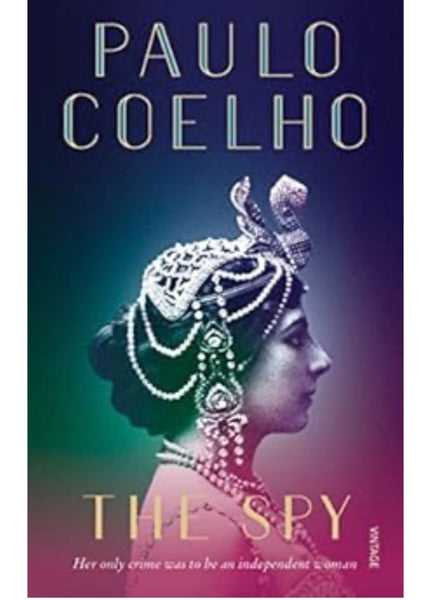
HER ONLY CRIME WAS TO BE AN INDEPENDENT WOMAN
When Mata Hari arrived in Paris she was penniless. Within months she was the most celebrated woman in the city.
As a dancer, she shocked and delighted audiences; as a courtesan, she bewitched the era’s richest and most powerful men.
But as paranoia consumed a country at war, Mata Hari’s lifestyle brought her under suspicion. In 1917, she was arrested in her hotel room on the Champs Elysees, and accused of espionage.
Told in Mata Hari’s voice through her final letter, The Spy is the unforgettable story of a woman who dared to defy convention and who paid the ultimate price.hardcover
-
 Visit product page →
Author Mia Sosa Language English.
One engagement. Two best friends. Three's a crowd.
On the eve of their college graduation, best friends Javier Báez and Marisol Campos swore never to date someone the other doesn’t approve of. Now, almost a decade later, Javi has a problem. Mari, the woman he’s secretly pined for since sophomore year, is engaged—and Javi didn’t even get the chance to vet the Pedro Pascal knockoff she plans to marry.
A successful entertainment lawyer in Los Angeles, Mari is no longer seeking Javi’s dating advice or waiting for him to declare his love. Instead, she’s made a different pact—with herself. And to succeed, Mari’s vowing to build a future with someone who wants to commit to her.
With his life and career finally on track, Javi’s ready to confess his feelings. Except Mari’s changed the script and moved on without him. Javi has just six weeks to convince Mari this marriage is a flop. If that means he needs to ruffle some feathers to help her avert disaster, well, he’s up for the challenge. After all, isn’t that what best friends are for?About Author
Mia Sosa is a USA Today bestselling author of romantic comedies and contemporary romances that celebrate our multicultural world. She has received praise from The Washington Post, Bustle, NPR, Entertainment Weekly, POPSUGAR, BuzzFeed, Oprah Daily, and many more. A native of East Harlem and a graduate of the University of Pennsylvania and Yale Law School, she lives in Maryland with her college sweetheart, their two book-obsessed daughters, a gentle Cavalier King Charles spaniel, and one adorable rescue cat that rules them all.
Pages: 448
ISBN: 9798217044306
-
 Visit product page →
Author: Carol Bensimon; Translated from the Portuguese to English by Zoë Perry and Julia Sanches
After years spent outrunning her past, Cecília reexamines the case of a close family friend killed by a colleague and rival: her father.
In 1988, shortly after Brazil reestablishes democratic rule, a state congressman is shot and killed in Porto Alegre. The main suspect: a close friend and colleague in congress, Representative Raul Matzenbacher.
Many years later, Cecília Matzenbacher, his daughter, migrates from Southern Brazil to California, where she finds work as a taxidermist. Her temperament is ideally suited to this type of restoration and the careful reconstruction of a world frozen in time. But as Cecília confronts her own history and the memories of the investigation surrounding her father, her knack for composition frays.
When news arrives that Raul has suffered a stroke and Cecília’s chances to see him again may be limited, her past can no longer stay put, posed like a specimen behind glass. Her story emerges, the past stalking her present, threatening to derail the life she’s made for herself in the United States.
In sleek, arresting prose imbued with the suspense-filled edge of a true-crime thriller, Diorama cements Carol Bensimon’s status as one of the most dynamic voices in contemporary Brazilian literature and demonstrates her narrative gifts at their apex. Fusing police procedural, coming-of-age story, and family drama, Diorama is a moving mystery about what and how we remember, a novel that endangers our notions of what is or isn’t still alive inside all of us.About Author
About the Author
Carol Bensimon was born in Porto Alegre, Brazil, in 1982. She is the author of the highly acclaimed novel O Clube dos Jardineiros de Fumaça, which won the Jabuti Award, the most prestigious literary award in Brazil, and was short-listed for the São Paulo Prize for Literature. She is the author of the novels We All Loved Cowboys and Sinuca embaixo d’água and of the acclaimed story collection Pó de parede. In 2012 she was selected by Granta as one of the Best Young Brazilian Novelists. Bensimon has a master’s degree in creative writing from PUCRS and lives with her girlfriend in Mendocino, California.
Imprint Publisher
MCD
ISBN
9780374616038
Language: English
Length: 272
-
 Visit product page →
A roiling chronicle of motherhood and colonization from a writer who “alternates between a dramatic, high-octane style and a terse and humorous frankness” (Sheila Heti)
Recipient of the 2021 Camões Prize, the most important award for literature in the Portuguese language
A potent whirl of history, mythology, and grapevine chatter, The Joyful Song of the Partridge absorbs readers into its many hiding places and along the wandering paths of its principal characters, whose stark words will stay with you long after the journey is done.
No one knows where Maria des Dores came from. Did she ride in on the armored spines of crocodiles, was she carried many miles in the jaws of fish?
The only clear fact is that she is here, sitting naked in the river bordering a town where nothing ever happens.
The townspeople murmur restlessly that she is possessed by perverse impulses. They interpret her arrival as an omen of crop failure or, in more hopeful tones, a sign that womankind will soon seize power from the greedy hands of men.
As The Joyful Song of the Partridge unfolds, Paulina Chiziane spirals back in time to Maria’s true origins: the days of Maria’s mother and father when the pressure to assimilate in Portuguese-controlled Mozambique formed a distorting bond on the lives of black Mozambicans. -
 Visit product page →
Sleepwalking Land written by Mia Couto translated by David Brookshaw.
On almost every page of this witty magical realist whodunit, we sense Couto's delight on those places where language slips officialdom's asphyxiating grasp." The New York Times Book Review on The Last Flight of the Flamingo
The most prominent of the younger generation of writers in Portuguese-speaking Africa, Couto passionately and sensitively describes everyday life in poverty-stricken Mozambique." Guardian (London)
Quite unlike anything else I have read from Africa."
Doris Lessing
As the civil war rages in 1980s Mozambique, an old man and a young boy, refugees from the war, seek shelter in a burnt-out bus. Among the effects of a dead passenger, they come across a set of notebooks that tell of his life. As the boy reads the story to his elderly companion, this story and their own develop in tandem. Written in 1992, Mia Couto's first novel is a powerful indictment of the suffering war brings.
Born in 1955 in Mozambique, Mia Couto ran the AIM news agency during the revolutionary struggle. He now lives in Maputo where he works as an environmental biologist and heads the Mozambique side of the Limpopo Transnational Park. In 2007 he was the first African author to win the Latin Union Award for Romance Languages; in 2013 he was awarded the €100,000 Camões Prize for Literature, in recognition of his life's work. In 2014 he received the $50,000 Neustadt Prize for Literature, and in 2015 he was shortlisted for the Man Booker International Prize.
Author
Mia Couto was born in 1955 in Mozambique and is the most prominent writer in Portuguese-speaking Africa. He has been active as a journalist and during the revolutionary struggle headed the AIM news agency. He now lives in Maputo where he works as an environmental biologist and runs the Mozambique part of the Kruger National Park.
Translator
David Brookshaw is a London-born professor of Brazilian Studies at the University of Bristol specializing in comparative literature, translation, and postcolonial Portuguese literature. He has translated works by Mia Cuoto and Onésimo Almeida and compiled an anthology of stories by the Portuguese author José Rodrigues Miguéis.
Language English Print length 256 pages ISBN-10 185242897X ISBN-13 978-1852428976 -
 Visit product page →
Author Conceição Lima Translated to English by shook.
WINNER OF THE 2021 WORDS WITHOUT BORDERS—ACADEMY OF AMERICAN POETS POEMS IN TRANSLATION CONTEST
No Gods Live Here, the first book-length collection by a woman from São Tomé to appear in English, is grounded in the lush islands' history of slavery, colonialism, and independence.
A career-spanning collection from giant of Santomean poetry Conceição Lima, No Gods Live Here catalogues and memorializes the cruelties and triumphs of the country's past alongside the poet's own childhood poems set against the tiny island nation's distinctive flora and geography. Through vivid imagery, Lima evokes São Tomé and Príncipe, from popular Santomean music to imagery of fishermen on the beach, while remaining ever aware of the subjective meeting of memory, time, and place.
Through poetry, Lima unites past and present to resurrect hope in human creation and the possibility of metamorphosis.
Author
Conceição Lima was born in 1961 in the island nation of São Tomé and Príncipe, where she resides today. She studied journalism in Portugal and attended graduate school in London, where she later worked as a producer at the BBC’s Portuguese Language Service. She has published four books of poetry: O Útero da Casa (The Womb of the House) in 2004, A Dolorosa Raiz do Micondó (The Painful Root of the Micondó) in 2006, O País de Akendenguê (The Country of Akendenguê) in 2011, and Quando Florirem Salambás no Tecto do Pico(When Velvet Tamarinds Flower on Pico de São Tomé) in 2015. Her work in Shook’s translation has appeared in the Literary Review, Jai-Alai, and World Literature Today.
Shook is a poet and translator whose work with Conceição Lima has been recognized with a 2017 Translation Fellowship from the National Endowment for the Arts and as a winner of the 2021 Words Without Borders—Academy of American Poets Poems in Translation Contest.
Publisher: Deep VellumShipping dimensions: 9" H x 6" W x 1" LISBN: 9781646053322Length: 225 pgs -
 Visit product page →
Author Giovani Martins and translated to English by Julia Sanches.
From one of Brazil’s most acclaimed new literary stars, a twenty-first-century epic set in Rio’s largest favela.
Life on the morro, the hill, is good. Five young people—the brothers Washington and Wesley and their friends Douglas, Murilo, and Biel—live close to Rocinha’s main avenue, Via Ápia, just a quick bus ride from the beaches of Rio de Janeiro.
But the rhythms of their lives stutter and scratch when Brazil’s militarized police storm Rocinha as part of “pacification” efforts ahead of the upcoming World Cup and an influx of international tourists. Via Ápia charts the expectant anxiousness before the police’s invasion, the chaos born from their occupation of the hill, and the aftermath of their silent withdrawal from the favela after one year.
Told in heated bursts and marked by the charged chronology of the protagonists’ lives, Geovani Martins’s prodigious debut novel knits together the dramas and dreams of the favela during a peak of turbulent unrest. Like the boom boom kat of Brazilian funk, the unbridled ambitions and resolute friendships of these characters blare throughout Via Ápia, delivering a resonant counternarrative to the notion that violent interventions are the state’s only remedy to the afflictions of crime and poverty. The favela retorts: life, life is the answer.Author
Geovani Martins was born in 1991 in Rio de Janeiro, Brazil. He is the author of The Sun on My Head, named one of the Best Brazilian Books of the Century by Folha de São Paulo. He grew up with his mother in the Rio neighborhood of Vidigal. He supported his writing by working as a sandwich- board man and selling drinks on the beach, and was discovered during creative writing workshops at FLUP, the literary festival of the Rio favelas. Via Ápia is his first novel.
Julia Sanches translates works from Portuguese, Spanish, and Catalan. Her translations include Slash and Burn by Claudia Hernández, for which she won a PEN/Heim Award, as well as works by Noemi Jaffe, Daniel Galera, and Geovani Martins. She is a founding member of the Cedilla & Co. translators’ collective, and she lives in Providence, Rhode Island.Publisher: Farrar, Straus And GirouxShipping dimensions: 8" H x 5" W x 1" LISBN: 9780374612986length:352 -
 Visit product page →
Written by Antonio Lobo Antunes, Translated to English by Jeff Love
A novel about the horrors of war and its aftermath from one of Europe's most brilliant authors
In this direct and vigorous tale, award-winning author Ant nio Lobo Antunes returns to the subject of the Portuguese colonial war in Angola with a dramatic account of atrocity and vengeance. Drawing on his own bitter experience as a soldier stationed for twenty-seven months in Angola, Lobo Antunes tells the story of a young African boy who is brought to Portugal by one of the soldiers who destroyed the child's village, and of the boy's subsequent brutal murder of this adoptive father figure at a ritual pig killing.
Deftly framing the events through an assembly of interwoven narratives and perspectives, this is one of Lobo Antunes's most captivating and experimentally written books. It is also a timely consideration of the lingering wounds that remain from the conflict between European expansionism and its colonized victims who were forced to accept the norms of a supposedly superior culture.About author
António Lobo Antunes, born in 1942 in Benfica, is considered to be Portugal's greatest living writer. The author of more than twenty novels, including What Can I Do When Everything's On Fire?, he has won many awards and makes his home in Lisbon.
Jeff Love is a research Professor of German and Russian at Clemson University, has published three monographs, edited two collections of articles and translated three books, two philosophical treatises, one German, the other Russian, and a novel by renowned Portuguese author António Lobo Antunes. Professor Love’s primary research fields are German and Russian philosophy and theory of the novel. He has given talks at universities throughout Europe as well as in China and contributed to the Philosophical Salon at the LA Review of Books. He has been awarded, among others, the John E. Sawyer Fellowship at the National Humanities Center (2014-2015), the University Research Scholarship and Artistic Achievement Award (2018) at Clemson University and the Whiting Fellowship in the Humanities (1997-1998) while at Yale University.
ISBN
9780300226621Binding
HardcoverLanguage: EnglishLength: 384 pgs