Mother's Day Gift Sets
-
 Visit product page →
Princess earrings in filigree, redesigned for the Icon Collection.
Gold Plated Silver 925% earrings with approximately 7.0 cm and 11.0 gr.
Made in Portugal
-
 Visit product page →
The Pointed Collection
The first glass producing factory – A Real Fábrica de Vidros da Marinha Grande – was established by the Marquis of Pombal in 1769. Since then many factories have maintained the regions secular tradition. They produce high quality mouth blown glass.
The Depósito da Marinha Grande, with their vast variety of products, keeps up their tradition, introducing innovative techniques in the production of this sustainable, yet noble product.
Made in Portugal
Material: Mouth Blown Glass
Dimensions: Height: 16.5cm, Diameter 8.5cm
-
 Visit product page →
The Hour of the Star, Clarice Lispector’s consummate final novel, may well be her masterpiece.
Narrated by the cosmopolitan Rodrigo S.M., this brief, strange, and haunting tale is the story of Macabéa, one of life’s unfortunates. Living in the slums of Rio and eking out a poor living as a typist, Macabéa loves movies, Coca-Cola, and her rat of a boyfriend; she would like to be like Marilyn Monroe, but she is ugly, underfed, sickly, and unloved.
Rodrigo recoils from her wretchedness, and yet he cannot avoid the realization that for all her outward misery, Macabéa is inwardly free. She doesn’t seem to know how unhappy she should be. As Macabéa heads toward her absurd death, Lispector employs her pathetic heroine against her urbane, empty narrator—edge of despair to edge of despair—and, working them like a pair of scissors, she cuts away the reader’s preconceived notions about poverty, identity, love, and the art of fiction. In her last book, she takes readers close to the true mystery of life and leaves us deep in Lispector territory indeed.
Hardcover | 128 pages | 5.40" x 8.40"
-
 Sold outVisit product page →
edited by Helder Macedo and Thomas Earle with illustrations by André Carrilho.
Luís de Camões (1524(?)–1580) lived in a world in transition. The existential pilgrimage recorded in his poetry is a search for something as inde?nable, and as revolutionarily modern, as the pursuit of happiness on earth. In the process, he was a poet of doubt rather than certainty, rupture rather than continuity, immanence rather than transcendence, experience rather than faith and, at the end of a life “scattered in pieces throughout the world”, he found fragmentation instead of the totality he had desired.His majestic epic poem, The Lusiads, centred on the pioneering voyage of Vasco da Gama to the East, which opened the doors of Renaissance Humanism to the modern world, is as much the celebration of a nation (Portugal) as an autobiographical representation of his own life. C. M. Bowra, in his major work on epic poetry, From Virgil to Milton, characterizes The Lusiads as “the epic of Humanism”. And Schlegel, one of the founders of Romanticism, considers it “the supreme example of epic poetry” and “the only heroic poem of the Modern period”. But it is an ambiguous epic, situated between a past deserving celebration and the vision of a future contaminated by doubt and uncertainty.
Camões’ lyric poetry has been comparatively neglected, but it is certainly no less impressive. Indeed, The Lusiads can be better understood from the perspective of his lyric poetry. And, in translation, both gain by being as close as possible to the original. This bilingual edition provides an ample selection of the poet’s lyric verse complemented by some passages of the epic, avoiding the constrictions of rhyme and metre.
The poetry of Camões helps us to understand not only the time in which he lived but also our own time. (Based on the introduction by Helder Macedo)
Language: Portuguese, English Dimensions: 148 x 208 x 23 mm Cover: Softcover Pages: 352 ISBN: 9789895365746 -
 Sold outVisit product page →
Written by Paulo Coelho, Translated to English by Alan R. Clarke
The extraordinary international bestseller.
“It’s a brilliant, magical, life-changing book that continues to blow my mind with its lessons."—Neil Patrick Harris, actor
“Translated into 80 languages, the allegory teaches us about dreams, destiny, and the reason we are all here.”—Oprah Daily
Combining magic, mysticism, wisdom, and wonder into an inspiring tale of self-discovery, this beloved work of philosophical fiction, The Alchemist, has become a modern classic, selling millions of copies around the world and transforming the lives of countless readers across generations.
This story, dazzling in its powerful simplicity and soul-stirring wisdom, is about an Andalusian shepherd boy named Santiago who travels from his homeland in Spain to the Egyptian desert in search of a treasure buried near the Pyramids. Along the way he meets a Gypsy woman, a man who calls himself a king, and an alchemist, all of whom point Santiago in the direction of his quest. No one knows what the treasure is, or if Santiago will be able to surmount the obstacles in his path. But what starts out as a journey to find worldly goods turns into a profound journey of spiritual self-discovery.
Lush, evocative, and deeply humane, the story of Santiago is an eternal testament to the transforming power of our dreams and the importance of listening to our hearts.
About Author:
Paulo Coelho, born in Rio de Janeiro in 1947, is one of the bestselling and most influential authors in the world.The Alchemist,The Pilgrimage,The Valkyries,Brida,Veronika Decides to Die,Eleven Minutes,The Zahir,The Witch of Portobello,The Winner Stands Alone,Aleph,Manuscript Found in Accra, andAdultery, among others, have sold 150 million copies worldwide.
Publisher: HarperCollinsShipping dimensions: 8" H x 5" W x 1" LISBN: 9780062315007Length: 208Language: English -
 Sold outVisit product page →
Written by Jose Saramago, Translated by Giovanni Pontiero
International Bestseller | A stunningly powerful novel of humanity's will to survive against all odds during an epidemic by a winner of the Nobel Prize for Literature.
"This is a shattering work by a literary master.”—Boston Globe
A city is hit by an epidemic of "white blindness" which spares no one. Authorities confine the blind to an empty mental hospital, but there the criminal element holds everyone captive, stealing food rations and raping women. There is one eyewitness to this nightmare who guides seven strangers—among them a boy with no mother, a girl with dark glasses, a dog of tears—through the barren streets, and the procession becomes as uncanny as the surroundings are harrowing.
A magnificent parable of loss and disorientation, Blindness has swept the reading public with its powerful portrayal of our worst appetites and weaknesses—and humanity's ultimately exhilarating spirit.
"This is an important book, one that is unafraid to face all of the horror of the century."—Washington Post
About Author
JOSE SARAMAGO (1922-2010) was the author of many novels, among them Blindness, All the Names, Baltasar and Blimunda, and The Year of the Death of Ricardo Reis.In 1998 he was awarded the Nobel Prize for Literature
Giovanni Pontiero (10 February 1932 - 10 February 1996) was a British scholar and translator of Portuguese fiction, most notably the works of José Saramago. His translation of the Saramago work The Gospel According to Jesus Christ was awarded the Teixeira-Gomes Prize for Portuguese translation.
Publisher: HarperCollinsShipping dimensions: 8" H x 5" W x 1" LISBN: 9780156007757Labguage: EnglishLength: 352 pgs -
 Sold outVisit product page →
Written by Clarice Lispector, Translated to English by Alison Entrekin
Near to the Wild Heart, published in Rio de Janeiro in 1943, introduced Brazil to what one writer called “Hurricane Clarice”: a twenty-three-year-old girl who wrote her first book in a tiny rented room and then baptized it with a title taken from Joyce: “He was alone, unheeded, near to the wild heart of life.”
The book was an unprecedented sensation — the discovery of a genius. Narrative epiphanies and interior monologue frame the life of Joana, from her middle-class childhood through her unhappy marriage and its dissolution to transcendence, when she proclaims: “I shall arise as strong and comely as a young colt.”
About Author
Clarice Lispector (1920–1977), the greatest Brazilian writer of the twentieth century, has been called "astounding" (Rachel Kushner), "a penetrating genius" (Donna Seaman, Booklist ), and "one of the twentieth century's most mysterious writers" (Orhan Pamuk). Alison Entrekin has translated a number of works by Brazilian and Portuguese authors into English, including City of God by Paulo Lins and Budapest by Chico Buarque. General editor of the new translations of Clarice Lispector's complete works at New Directions,BENJAMIN MOSER is the author of Why This World: The Biography of Clarice Lispector, and Sontag: Her Life and Work, which was awarded the Pulitzer Prize. His new book, The Upside-Down World: Meetings with the Dutch Masters, will be published in October.
Shipping dimensions: 8" H x 5" W x 1" LISBN: 9780811220026Language: EnglishLemgth: 220 pgs -
 Visit product page →
From José Saramago, Winner of the Nobel Prize for Literature, Baltasar and Blimunda is a “brilliant...enchanting novel” (The New York Times Book Review) of romance, deceit, religion, and magic set in eighteenth-century Portugal at the height of the Inquisition. Portugal, 1711: an amorous friar is pursued naked through the rubble-strewn streets of Lisbon; an enthusiastic procession of flagellants roars with pleasure over the damnation of adultery; a royal prince uses hapless sailors for target practice; and women dressed in colorful finery watch as lapsed converts and sorcerers are put to death by flames. In the midst of the terrors of the Inquisition and the plague, a seemingly mismatched couple discover the wonders of love. This poetic tale, graced with exquisite historical details and full of magic and adventure, is a tapestry of human folly and human will.
-
 Sold outVisit product page →
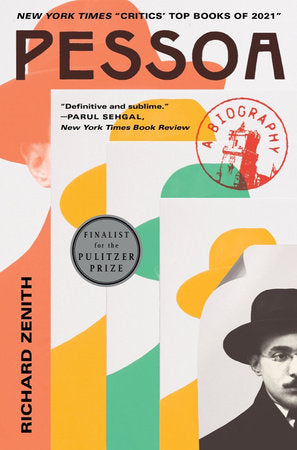
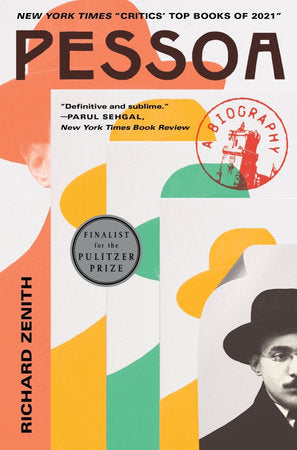
Nearly a century after his wrenching death, the Portuguese poet Fernando Pessoa (1888–1935) remains one of our most enigmatic writers. Believing he could do “more in dreams than Napoleon,” yet haunted by the specter of hereditary madness, Pessoa invented dozens of alter egos, or “heteronyms,” under whose names he wrote in Portuguese, English, and French. Unsurprisingly, this “most multifarious of writers” (Guardian) has long eluded a definitive biographer—but in renowned translator and Pessoa scholar Richard Zenith, he has met his match.
Relatively unknown in his lifetime, Pessoa was all but destined for literary oblivion when the arc of his afterlife bent, suddenly and improbably, toward greatness, with the discovery of some 25,000 unpublished papers left in a large, wooden trunk. Drawing on this vast archive of sources as well as on unpublished family letters, and skillfully setting the poet’s life against the nationalist currents of twentieth-century European history, Zenith at last reveals the true depths of Pessoa’s teeming imagination and literary genius.
Much as Nobel laureate José Saramago brought a single heteronym to life in The Year of the Death of Ricardo Reis, Zenith traces the backstories of virtually all of Pessoa’s imagined personalities, demonstrating how they were projections, spin-offs, or metamorphoses of Pessoa himself. A solitary man who had only one, ultimately platonic love affair, Pessoa used his and his heteronyms’ writings to explore questions of sexuality, to obsessively search after spiritual truth, and to try to chart a way forward for a benighted and politically agitated Portugal.
Although he preferred the world of his mind, Pessoa was nonetheless a man of the places he inhabited, including not only Lisbon but also turn-of-the-century Durban, South Africa, where he spent nine years as a child. Zenith re-creates the drama of Pessoa’s adolescence—when the first heteronyms emerged—and his bumbling attempts to survive as a translator and publisher. Zenith introduces us, too, to Pessoa’s bohemian circle of friends, and to Ophelia Quieroz, with whom he exchanged numerous love letters. Pessoa reveals in equal force the poet’s unwavering commitment to defending homosexual writers whose books had been banned, as well as his courageous opposition to Salazar, the Portuguese dictator, toward the end of his life. In stunning, magisterial prose, Zenith contextualizes Pessoa’s posthumous literary achievements—especially his most renowned work, The Book of Disquiet.
A modern literary masterpiece, Pessoa simultaneously immortalizes the life of a literary maestro and confirms the enduring power of Pessoa’s work to speak prophetically to the disconnectedness of our modern world.
Paperback
-
 Cork Oak Tree NecklaceVisit product page →
 -
 Visit product page →
Vintage Heart Necklace
Silver and gold Necklace with marcasites and Ruby zirconia, exclusive for Valentine's Day.
Marcasites jewelry became popular in Portugal in the early 20th century as silver replicas of traditional pieces of 18th century Portuguese jewelry. Now they are brought into modernity as a celebration of old-fashioned love - a romance like that of our grandparents, whose confessions of love are perpetuated in time.
Silver 925% necklace with 40cm (plus 5cm) and 3.0gr.
Pendant with marcasites and 2.0 cm.
Handmade in Portugal
-
 Visit product page →
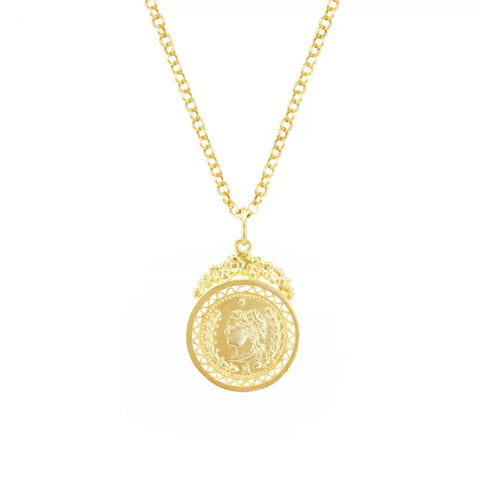
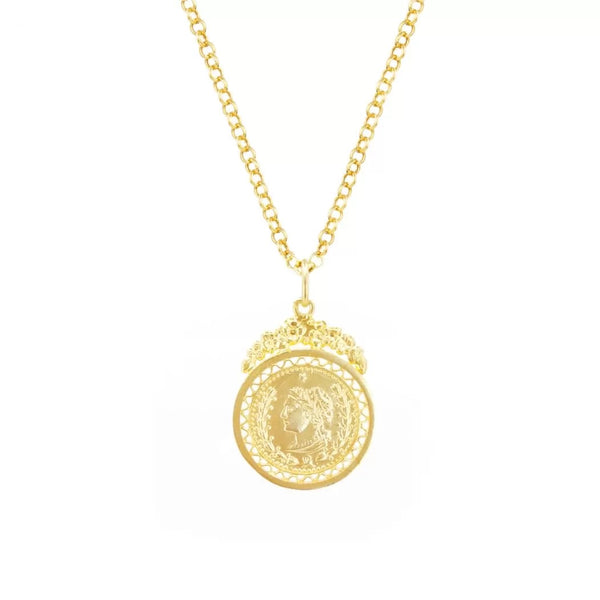
Gold plated Silver Coin necklace, part of Filigree Collection
The Coins are adorned in a frame to be used as jewelry pieces.
Gold plated silver 925% necklace with 45 cm and 6.1 gr. Medal with 3.5 cm.
Made in Portugal.
-
 Sold outVisit product page →
Silver Heart of Viana ring in filigree, part of The Classics Collection.
The Heart of Viana was created as a symbol of devotion to the Sacred Heart but soon became an iconic and emotional heritage of Portugal.
Gold plated silver 925% adjustable ring with 4.0cm and 6.7gr.
Handmade in Portugal.
-
 Sold outVisit product page →
A conceituada «História de Portugal» de A.H. de Oliveira Marques, numa versão abreviada, há décadas ausente das livrarias.
Edição simultânea em português, inglês e francês.
A história de Portugal é longa e complexa, e por isso o próprio de Oliveira Marques começou por fixá-la em três volumes que se tornaram um clássico da historiografia nacional. Mas foi também ele, um dos mais eminentes historiadores portugueses, a preparar a partir daí esta versão brevíssima, com todas as linhas essenciais concentradas em apenas 250 páginas, num pequeno formato raro, há muito esgotado. Uma versão que conserva todo o rigor e alcance histórico das edições mais alargadas, privilegiando uma relação mais directa, clara e certeira com o leitor, útil tanto para estudiosos como para curiosos. -
 Visit product page →
An unsettling novel that sets us among an isolated group of men whose bonds break down in ways both hard to comprehend and impossible to look away from
On land where enslaved people were once tortured and murdered, the state built a penal colony in the wilderness, where inmates could be rehabilitated, but never escape. Now, decades later, and having only succeeded in trapping men, not changing them for the better, its operations are winding down.
But in the prison’s waning days, a new horror is unleashed: every full-moon night, the inmates are released, the warden is armed with rifles, and the hunt begins. Every man plans his escape, not knowing if his end will come at the hands of a familiar face, or from the unknown dangers beyond the prison walls.
Ana Paula Maia delivers a bracing vision of our potential for violence, and our collective failure to account for the consequences of our social and political action, or inaction. No crime is committed out of view for this novelist, and her raw, brutal power enlists us all as witnesses.
On Earth As It Is Beneath was shortlisted for the International Booker Prize 2026.
-
 Visit product page →
World—Ana Luísa Amaral’s second collection with New Directions—offers a new exhilarating set of poems that convey wonder, bemusement, and an ever-deepening appreciation of life. Weaving the thread that connects the poem to life, World speaks of our immense human perplexity in the face of everything around us and our oneness with it all. As Amaral notes, all of us, “humans and non-humans, are on the same ontological level, the differences being only a matter of perspective. We are all made of the same stuff as dreams—and stars.” Asked about her thoughts on World, Amaral’s peerless translator Margaret Jull Costa replied: “What I take from this collection of poems is a sense of joy in the ordinary—seeing an ant going about its business, or a bee or a fish, or the feeling of sharing a whole history with a particular table, or watching a very ordinary woman sitting on a train playing with the handle of her handbag. World also brings us meditations on colonization, slavery, and whaling. Like the world, it is full of surprises and full of joy and sadness.” These vibrant, exultant poems invite you to share this marvelous world: Yes, all you need (how easy!) is to say yes.
Language English Print length 144 pages ISBN-10 0811234835 ISBN-13 978-0811234832 -
 Sold outVisit product page →
Author Giovanna Madalosso translated by Bruna Dantas Lobato
NEW YORK TIMES 100 NOTABLE BOOK OF 2025
NPR BEST BOOK OF 2025Nominated for the 2026 Dublin Literary Award
The English-language debut of one of the most exciting voices in contemporary Brazilian literature, The Tokyo Suite is a gripping exploration of the complexities of modern family dynamics and the tensions hiding just under the surface of ordinary lives.
It’s a seemingly ordinary morning when Maju, a nanny, boards a bus with Cora, the young girl she’s been caring for, and disappears. The abduction, an act as impulsive as it is extreme, sets off a series of events that will force each character to confront their deepest fears and desires.
Fernanda, Cora's mother, is a successful executive who is so engulfed in her own personal crisis that she initially fails to notice her daughter's disappearance. Her marriage is strained, and she finds solace in an affair, distancing herself further from her family. Meanwhile, her husband, overwhelmed by the complexities of their domestic life, remains emotionally detached. As Maju navigates the streets of São Paulo with Cora, the “white army” of nannies, a term coined by Fernanda, seems to watch her every move, heightening her sense of paranoia and urgency.
Madalosso’s narrative delves deep into the human psyche, examining themes of maternal guilt, societal expectations, and the search for personal identity. Rich and multi-layered, The Tokyo Suite is a poignant and gripping tale that captures the essence of modern urban life and the lengths to which people will go to reclaim a sense of control and meaning in their lives.
Shipping dimensions: 8" H x 5" W x 1" LISBN: 9781609459802Language:EnglishLength: 208 pgsAuthorGiovana Madalosso is a Brazilian writer and screenwriter, born in Curitiba in 1975. She has been a finalist for the Biblioteca Nacional Award and the São Paulo Prize of Literature. The Tokyo Suite is her English-language debut.
TranslatorBruna Dantas Lobato is a writer and translator. Her fiction has appeared in The New Yorker, Guernica, A Public Space, and The Common. She was awarded the 2023 National Book Award in Translation for The Words That Remain by Stênio Gardel. Originally from Natal, Brazil, Dantas Lobato lives in Iowa and teaches at Grinnell College. Blue Light Hours is her debut novel. -
 Sold outVisit product page →
Author Frances De Pontes Peebles Language:English
The story of an intense female friendship fueled by affection, envy and pride--and each woman's fear that she would be nothing without the other.
Some friendships, like romance, have the feeling of fate.
Skinny, nine-year-old orphaned Dores is working in the kitchen of a sugar plantation in 1930s Brazil when in walks a girl who changes everything. Graça, the spoiled daughter of a wealthy sugar baron, is clever, well fed, pretty, and thrillingly ill behaved. Born to wildly different worlds, Dores and Graça quickly bond over shared mischief, and then, on a deeper level, over music.
One has a voice like a songbird; the other feels melodies in her soul and composes lyrics to match. Music will become their shared passion, the source of their partnership and their rivalry, and for each, the only way out of the life to which each was born. But only one of the two is destined to be a star. Their intimate, volatile bond will determine each of their fortunes--and haunt their memories.
Traveling from Brazil's inland sugar plantations to the rowdy streets of Rio de Janeiro's famous Lapa neighborhood, from Los Angeles during the Golden Age of Hollywood back to the irresistible drumbeat of home, The Air You Breathe unfurls a moving portrait of a lifelong friendship--its unparalleled rewards and lasting losses--and considers what we owe to the relationships that shape our lives.About Author
Frances de Pontes Peebles is the author of the novel, THE SEAMSTRESS (HarperCollins), translated into nine languages and winner of the Elle Grand Prix for Fiction, the Friends of American Writers Award, and the Michener-Copernicus Fellowship. Born in Pernambuco, Brazil, she is a graduate of the Iowa Writers’ Workshop. Her short stories have appeared in O. Henry Prize Stories, Zoetrope: All-Story, Missouri Review, and Indiana Review. Her story, THE SERRAMBI CASE, has been adapted into a short film by Australian director Emily Avila and entitled, IN A CANE FIELD. Her novel, THE SEAMSTRESS, was adapted for film and mini-series in Brazil as ENTRE IRMÃS
Language English Print length 528 pages ISBN-10 0735211000 ISBN-13 978-0735211001 -
 Sold outVisit product page →
Sobre Lisboa
Os escritores portugueses mais acarinhados e um fotógrafo de património.
O mesmo horizonte para a ficção e a realidade, em que criatividade literária e riqueza fotográfica mergulham na nossa geografia.
Um percurso concelho a concelho, ilha a ilha, escritor a escritor.
The whole of Lisbon in one book.
The most cherished Portuguese writers and a photographer specialising in heritage.
The same horizon for fiction and reality, in which literary creativity and photographic richness immerse themselves in our geography.
This is a journey that covers county after county, island after island, writer after writer.
-
 Sold outVisit product page →
Author Clara Drummond & translated to English by Daniel Hahn.
Role Play is a searing satire narrated by a wealthy young woman in Rio on the verge of a class-consciousness awakening.
Vivian is a curator, not just at her gallery gig in Rio de Janeiro, but in every aspect of her life. Her apartment has designer armchairs. Her wallet is Comme des Garçons. Everything is selected and arranged, even her lovers and friends. In Vivian’s world, everything comes in excess, including her own caustic selfawareness. As she informs us, “I’m a misandrist and a misogynist,” but she is fond of gay men, “the one type of human you can properly get along with as equals.”
Role Play examines the superabundances of Brazilian elites— their art, ethics, and monied ambivalence in the face of social inequality, machismo, and violence. As sharp and sparkling as broken champagne flutes, Clara Drummond’s prose is seductively frank and unflinching in its depiction of wealth’s power to warp the selfPublisher: Farrar, Straus And GirouxShipping dimensions: 8" H x 5" W x 0" LISBN: 9780374611286Langauge: EnglishLength: 128 -
 Sold outVisit product page →
1975, Luanda. A descolonização instiga ódios e guerras. Os brancos debandam e em poucos meses chegam a Portugal mais de meio milhão de pessoas. O processo revolucionário está no seu auge e os retornados são recebidos com desconfiança e hostilidade. Muitos nao têm para onde ir nem do que viver. Rui tem quinze anos e é um deles. 1975. Lisboa. Durante mais de um ano, Rui e a família vivem num quarto de um hotel de 5 estrelas a abarrotar de retornados — um improvável purgatório sem salvação garantida que se degrada de dia para dia. A adolescência torna-se uma espera assustada pela idade adulta: aprender o desespero e a raiva, reaprender o amor, inventar a esperança. África sempre presente mas cada vez mais longe.
Sobre Autor
Dulce Maria Cardoso publicou os romances Eliete (2018, livro do ano, entre outros, no Público, Expresso e no JL, Prémio Oceanos e finalista do Prémio Femina), O Retorno (2011, Prémio Especial da Crítica e livro do ano dos jornais Público e Expresso), O Chão dos Pardais (2009, Prémio PEN Clube Português e Prémio Ciranda), Os Meus Sentimentos(2005, Prémio da União Europeia para a Literatura) e Campo de Sangue (2001, Prémio Acontece, escrito na sequência de uma Bolsa de Criação Literária atribuída pelo Ministério da Cultura).
Os seus romances estão traduzidos em várias línguas e publicados em mais de duas dezenas de países. A tradução inglesa de O Retorno recebeu, em 2016, o PEN Translates Award.
Publicou contos em revistas e jornais, a maioria dos quais reunida nas antologias Até Nós (2008) e Tudo São Histórias de Amor(2014). Alguns deles fazem parte de várias antologias estrangeiras, e «Anjos por dentro»foi incluído na antologia Best European Fiction 2012, da Dalkey Archive. Em 2017, foram publicados os textos Rosas, escritos no âmbito da estada em Lisboa de Anne Teresa de Keersmaeker, quando a coreógrafa foi a Artista na Cidade. Criou, ainda, a personagem Lôá, a menina Deus, para uma série da RTP2.
A obra de Dulce Maria Cardoso é estudada em universidades de vários países, fazendo parte de programas curriculares, e tem sido objeto de várias teses académicas, bem como adaptada a cinema, teatro e televisão. A autora tem participado em vários festivais de prestígio internacional.
Em 2012, recebeu do Estado francês a condecoração de Cavaleira da Ordem das Artes e Letras. Assina, na Visão, a coluna «Autobiografia não autorizada» (crónicas publicadas em livro, em 2021 e 2023).ISBN: 9789896711160 Publisher: Tinta da China Release Date: March of 2012 Language: Portuguese Dimensions: 131 x 193 x 20 mm Length: 276 -
 Sold outVisit product page →
Written by Isabel Minhos Martins and illustrated by Bernardo P. Carvalho.
Leve prosa poética sobre a doce e afetuosa reação de uma mãe aos atos e às descobertas do filho. Evidencia a importância de cada gesto do filho, por menor que seja, para o coração da mãe. Ideal para crianças que passam pelo processo de alfabetização.
Idioma Português Número de páginas 26 páginas ISBN-10 8564406020 ISBN-13 978-8564406025 -
 Sold outVisit product page →
A noite chegou, e com ela trouxe o soninho.
Os animais também têm sono, sabias?
Puxa as tiras e descobre onde os animais dormem, de noite e de dia! Um jogo de escondidas, perfeito para mãos pequeninas. -
 Sold outVisit product page →
Yasmeen Ismail. Language: Portuguese. Children’s book.
Deixa-te levar pela imaginação…
A Lila tem uma imaginação prodigiosa! Num rebuliço constante, ela luta contra monstros assustadores, explora lugares remotos… É imparável!
Será que a Lila vai conseguir encontrar um companheiro para as suas aventuras?
Um livro que celebra a infância, a fantasia e a relação entre um avô e a sua neta.
Da mesma autora de "Hora de Deitar, Baltasar!", vencedor do prémio Melhor Livro Ilustrado do New York TimesEnglish Overview
Mummy and Lila are going to visit Grandpa, but Lila is busy in her own imaginative world. Whenever Mummy asks her what she is doing, she always says, "Nothing!" Only the reader is allowed in to her colourful, crazy, creative world where she is wrestling an octopus, or racing along in a winged chariot, or flying with birds over a noisy jungle.
But Grandpa has a plan to join Lila in her secret world. After all, playing is even more fun when you play together!
Bursting with energy and colour, this is a joyous celebration of the imagination and creativity that will speak to child and adult alike.
Yasmeen Ismail won the V&A Illustration Award 2014 and has been shortlisted for the Waterstone's Children's Book Prize. I'm a Girl! has been nominated for the Kate Greenaway Award.