Your cart is currently empty!
SAUDADE TORONTO
Camões- A Global Poet for Today
$30.00

SAUDADE TORONTO
Camões- A Global Poet for Today
$30.00
edited by Helder Macedo and Thomas Earle with illustrations by André Carrilho.
Luís de Camões (1524(?)–1580) lived in a world in transition. The existential pilgrimage recorded in his poetry is a search for something as inde?nable, and as revolutionarily modern, as the pursuit of happiness on earth. In the process, he was a poet of doubt rather than certainty, rupture rather than continuity, immanence rather than transcendence, experience rather than faith and, at the end of a life “scattered in pieces throughout the world”, he found fragmentation instead of the totality he had desired.
His majestic epic poem, The Lusiads, centred on the pioneering voyage of Vasco da Gama to the East, which opened the doors of Renaissance Humanism to the modern world, is as much the celebration of a nation (Portugal) as an autobiographical representation of his own life. C. M. Bowra, in his major work on epic poetry, From Virgil to Milton, characterizes The Lusiads as “the epic of Humanism”. And Schlegel, one of the founders of Romanticism, considers it “the supreme example of epic poetry” and “the only heroic poem of the Modern period”. But it is an ambiguous epic, situated between a past deserving celebration and the vision of a future contaminated by doubt and uncertainty.
Camões’ lyric poetry has been comparatively neglected, but it is certainly no less impressive. Indeed, The Lusiads can be better understood from the perspective of his lyric poetry. And, in translation, both gain by being as close as possible to the original. This bilingual edition provides an ample selection of the poet’s lyric verse complemented by some passages of the epic, avoiding the constrictions of rhyme and metre.
The poetry of Camões helps us to understand not only the time in which he lived but also our own time. (Based on the introduction by Helder Macedo)
| Language: | Portuguese, English |
| Dimensions: | 148 x 208 x 23 mm |
| Cover: | Softcover |
| Pages: | 352 |
| ISBN: | 9789895365746 |
Related products
-
 Visit product page →
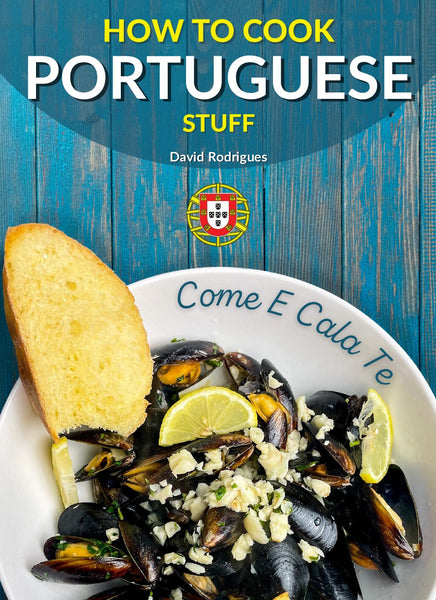
Portugal boasts one of the best cuisines in the world. But Portuguese food can also be intimidating. The days of being afraid to cook your VoVó’s favorite recipes are over, because I’m here to measure everything out, map it out patiently, and put everything into easy to understand English! From Seafood to Meats, from Gameday foods to Desserts, I’m covering all of your favorite Portuguese recipes. Impress your friends and family alike, because I can assure you, everyone will be going back for seconds!
Portuguese cookbook with 46 delicious easy to make recipes!
-
 Visit product page →
Badger & Burke Cards:
blank inside
size: 4.25" x 5.5" (A2)
printed on white cardstock
packaging: kraft envelope, cellophane sleeve
printed in canadaLOCAL ARTIST - Leila's Card Design | Handmade in Toronto
-
 On saleVisit product page →
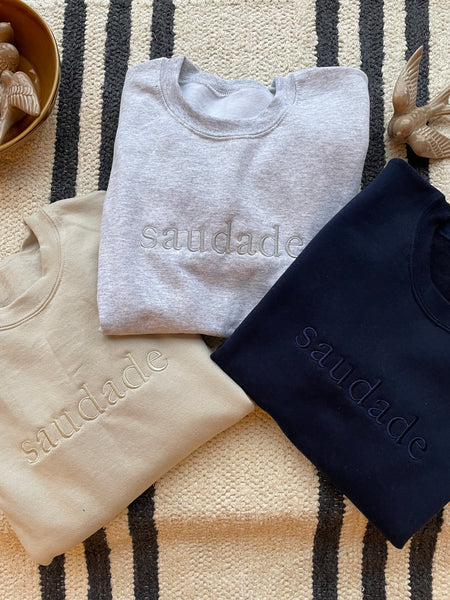
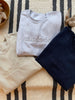
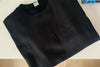
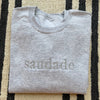
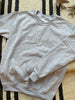
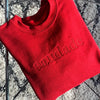
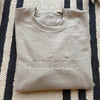
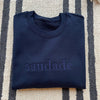
Premium Black Embroidery - Word Saudade
Crewneck sweatshirt 50% cotton and 50% polyester
Heavy Cotton Poly Blend with Light Fleece Interior
Unisex / Fits true to size
Premium Black Embroidery - Word Saudade
-
 Visit product page →
The first glass producing factory – A Real Fábrica de Vidros da Marinha Grande – was established by the Marquis of Pombal in 1769. Since then many factories have maintained the regions secular tradition. They produce high quality mouth blown glass.
The Depósito da Marinha Grande, with their vast variety of products, keeps up their tradition, introducing innovative techniques in the production of this sustainable, yet noble product.
Material: Mouth Blown Glassware
Dimensions: Height 18.5 cm, Diameter 5.5 cm
Made in Portugal












v

